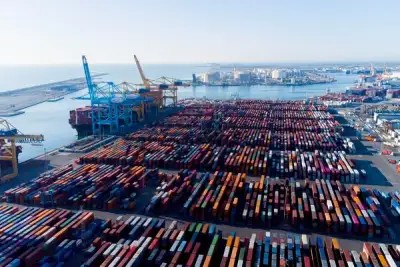
Maersk says Red Sea disruption will cut capacity by 15-20% in second quarter COPENHAGEN (Reuters) -The disruption to container shipping traffic in the Red Sea is increasing and is expected to reduce the industry’s capacity between the Far East and Europe by some 15%-20% in the second quarter, shipping group Maersk said on Monday. Maersk […]
Maersk says Red Sea disruption will cut capacity by 15-20% in second quarter
COPENHAGEN (Reuters) -The disruption to container shipping traffic in the Red Sea is increasing and is expected to reduce the industry’s capacity between the Far East and Europe by some 15%-20% in the second quarter, shipping group Maersk said on Monday.
Maersk and other shipping companies have diverted vessels around Africa’s Cape of Good Hope since December to avoid attacks by Iran-aligned Houthi militants in the Red Sea, with the longer voyage times pushing freight rates higher.
“The risk zone has expanded, and attacks are reaching further offshore,” Maersk said in an updated advisory to customers on Monday.
“This has forced our vessels to lengthen their journey further, resulting in additional time and costs to get your cargo to its destination for the time being,” it added.
The Danish company, viewed as a barometer of world trade, last week said that shipping disruptions caused by the Red Sea attacks were expected to last at least until the end of the year.
The knock-on effects included bottlenecks and so-called vessel bunching, where several ships arrive at port at the same time, as well as equipment and capacity shortages.
“We are doing what we can to boost reliability, including sailing faster and adding capacity,” Maersk said, adding that it had so far leased more than 125,000 additional containers.
“We have added capacity, where possible, in line with our customers’ needs,” the company said.
(Reporting by Louise Breusch Rasmussen, editing by Terje Solsvik, Kirsten Donovan)