You place your trade with confidence, but within minutes, you have been stopped out of the position just before the market turns around and moves precisely as you expected from the outset of your original position. This scenario is called a whipsaw.
You place your trade with confidence, but within minutes, you have been stopped out of the position just before the market turns around and moves precisely as you expected from the outset of your original position. This scenario is called a whipsaw.
Understand What Is Whipsaw in Trading and What Does It Mean in Market Terminology?
You enter a trade confidently, but your stop-loss is triggered just before the market reverses and moves exactly in the direction you originally anticipated. This frustrating scenario is known as a whipsaw.
For forex, equity, and crypto traders, whipsaws are more than technical disruptions—they can gradually erode both capital and confidence, creating financial and psychological challenges.
Whipsaw in Modern Markets, The New Event in High-Speed Trading
You enter the trade with confidence, but in just a few minutes, your position has been "stopped out" just before the market turns around and does exactly what you thought it would do from the very beginning of the initial position. This is called "whipsaw."
To the forex trader, the equity trader, and the crypto trader, however, the phenomenon of the whipsaw is more than just a technical issue. It is therefore both a mental and monetary issue that could slowly run an account down.
In today’s markets, whipsaws are not rare anomalies; they reflect normal patterns of trading behavior. Rapid moves, reversals, and stop-related triggers are now embedded in market dynamics, indicating shifts in liquidity, participation, and volatility.
Whipsaw as a Market Signal, Noise, Structure and Participation
Whipsaws in today's marketplace are often viewed as an indication of trends and demonstrate how market conditions have changed with respect to liquidity, trader participation and imbalance.
Traders encountering repeated whipsaw patterns often recognize them as signals of uncertainty rather than opportunity. For many participants, these conditions suggest caution rather than action.
When Whipsaw Typically Appears
The term whipsaw is used to describe a situation whereby the price makes a significant move in one direction, either causing the price to be triggered to enter or to stop loss, and then makes a rapid reversal in the opposite direction, often unexpectedly and without significant underlying economic news. Whipsaw generally occurs at:
Periods of low liquidity
Significant news releases
Periods of sideways or consolidating price action
Periods characterised by high volatility caused by algorithms
The Prevalence of Whipsaw Behavior in Today’s Markets
A defining trait of modern trading, whipsaw has developed from an incidental market occurrence to a major factor in the current marketplace due to the growth of algorithmic systems dominating order flow, where prices can react and reverse much quicker than what traditional methods of analysis can predict.
Traders relying on technical analysis understand that combining trend recognition with confirmation tools is essential for success in volatile, whipsaw-prone markets.
The Hidden Cost of Whipsaw, It's Not Just Money
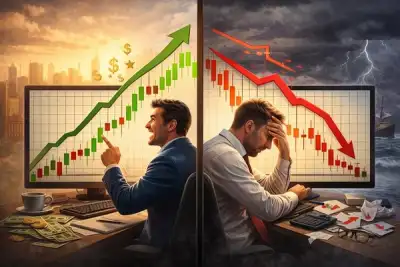
Though monetary loss is the obvious effect, the ultimate impact of repeated exposure to whipsaw may be more psychological in nature. Documented responses from the traders include:
Greater frustration arising from sudden reversals
Abandonment of previously consistent strategies
More cases of reactive or revenge trading
Hesitation in engaging with otherwise viable market opportunities
Such impacts often build cumulatively over time, which is part of the reason why trading environments may focus as much as anything on discipline in program execution as they do on selection in investment strategies.
Moreover, it's no surprise that institutional traders consider risk management discipline to be just as important as their choice of trading strategy.
Market Conditions That Amplify the Whipsaw Effects
However, the effect of whipsaw is markedly accentuated when particular execution or liquidity characteristics are combined with whipsaws.
Delayed or inconsistent execution speed
Sudden and Unpredictable Spread Expansion
Increased Slippage due to Volatility Spikes
To gain firsthand experience in a professional trading environment, you need to sign up for a professional trading account .
Traders looking for deeper insights into execution quality, liquidity access, and professional trading conditions can explore stptrading.io .
3 Observed Practices Employed by Professional Traders Dealing with Whipsaws
Traders at professional trading firms have been observed to work with whipsaws, rather than working to eliminate them. Their methods for dealing with whipsaws can be defined as below items. By doing so, you can filter out a large number of false signals and follow useful or positive predictions .
Lower Levels of Activity During Structural Uncertainty
There tends to be substantially lower levels of market engagement during periods of questionable price behaviour and consolidation as there is typically no identifiable direction.
Contextual Placement of Stops
When placing stops too close to the active price level, there will be higher chances of the stop being executed when there is an expansion of volatility in the market.
Selective Trading Based on Structure, Liquidity and Right Direction
Trader behaviour is more selective in their participation in the market, making their presence around those times when structural alignment, sufficient liquidity and a definite directional bias are present.
Preparedness as a Market Requirement
In today’s fast-paced and competitive markets, whipsaws are a defining feature rather than a temporary issue. Success no longer depends on predicting every move, but on having a structured framework, disciplined execution, and the ability to react quickly to sudden changes. Preparedness is essential in an environment where milliseconds and rapid reversals can determine outcomes.
It is no longer a matter of choice but a matter of how modern markets are, that preparedness in a marketplace where milliseconds count and reversals are frequent.
Disclaimer: This article is for informational purposes only and does not constitute financial or investment advice. Trading financial markets involves risk, and individuals should conduct independent research or consult a licensed financial professional before making trading decisions.