Nestle misses nine-month sales estimates, expects volume upturn by year-end By Richa Naidu LONDON (Reuters) -Nestle posted lower-than-expected nine-month sales growth on Thursday as higher product prices made shoppers balk, but said it expects volumes to turn positive again by the end of the year. The packaged goods industry has for over two years hit […]
Nestle misses nine-month sales estimates, expects volume upturn by year-end
By Richa Naidu
LONDON (Reuters) -Nestle posted lower-than-expected nine-month sales growth on Thursday as higher product prices made shoppers balk, but said it expects volumes to turn positive again by the end of the year.
The packaged goods industry has for over two years hit shoppers with higher prices, citing higher input costs that started with the COVID-19 pandemic and were exacerbated by Russia’s invasion of Ukraine. Everything from sunflower oil to freight has become more expensive, taking a toll on global supply chains.
Nestle’s 8.4% price increase was below the average analyst estimate of 8.6%. Real internal growth (RIG) – or a measure of sales volumes – fell 0.6%, meeting expectations. In the third quarter, RIG improved to a decline of 0.3%, Nestle said.
The company’s CEO, Mark Schneider, said he had “confidence that real internal growth, the sum of volume and mix, will turn positive in the second half of the year and again become the main driver of growth going forward.”
“Pricing will be more targeted, by brand and by country,” Schneider said.
“Key sales indicators are going in the right direction,” Vontobel analyst Jean-Philippe Bertschy said. “We expect volume growth to accelerate and gross margins to improve in the coming quarters.”
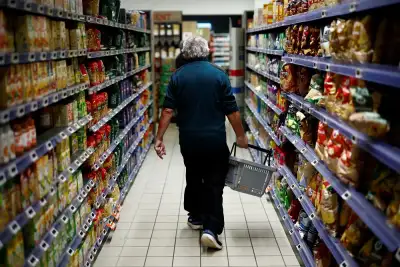
Investors and analysts have raised concerns that companies are pushing price rises too far and recommended that they focus more on marketing and innovation, amid a cost of living crisis that is seeing retailers’ private label brands stealing market share.
Organic sales, which exclude the impact of currency movement and acquisitions, rose 7.8% in the nine months ended September, the maker of Maggi stock cubes and Nescafe coffee said.
Analysts had on average expected organic sales growth of 8.1%.
Executives have in recent quarters flagged that costs are rising at a slower pace, but also warned that shoppers would continue to pay more for products like soap, toilet paper and coffee because companies still have not recouped years of damage from higher expenses.
Nestle confirmed its full-year outlook of organic sales growth between 7% and 8% and underlying trading operating profit margin between 17.0% and 17.5%.
A Nestle spokesperson said the firm had “not seen any impact from (weight loss drugs) on our sales”, referring to the potential threat posed to the packaged food industry by Novo Nordisk’s blockbuster weight-loss drug Wegovy.
The drug’s popularity has prompted concerns in the consumer and retail industry over whether food sales will be impacted. Nestle shares fell this month after Walmart, the world’s biggest retailer, said that it saw a slight pullback in food consumption with people taking appetite-suppressing drugs like Wegovy.
($1 = 0.8989 Swiss francs)
(Reporting by Richa Naidu; Editing by Christopher Cushing)