In finance, the most powerful technological changes are rarely the most visible. While digital apps, instant payments, and online platforms dominate attention, a deeper transformation is unfolding—one that operates quietly behind the scenes.
In finance, the most powerful technological changes are rarely the most visible. While digital apps, instant payments, and online platforms dominate attention, a deeper transformation is unfolding—one that operates quietly behind the scenes.
This transformation is not about new features. It is about a shift in how financial systems think, learn, and operate.
Artificial intelligence, real-time data processing, and advanced digital infrastructure are creating a new kind of financial ecosystem—one that is faster, smarter, and more adaptive than anything before it.
And the most surprising part? It’s already here.
From Digital Finance to Intelligent Finance
The first wave of financial technology focused on digitization—moving services online and making them accessible.
The current wave is different.
Finance is now evolving into intelligent systems. These systems don’t just process transactions—they analyze data, detect patterns, and adapt in real time. According to industry insights, nearly 94% of financial institutions are already deploying or piloting generative AI across core operations, signaling a major shift in how finance functions at its core ( The Tech Edvocate ).
This transformation means:
Systems can predict risks before they occur
Decisions can be made instantly
Services can adapt to individual users
Finance is no longer static. It is becoming dynamic.
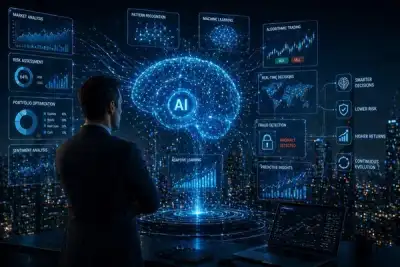
AI Is Becoming the Core Engine
Artificial intelligence is now central to financial systems.
Banks and financial institutions are embedding AI across operations—from fraud detection and compliance to customer service and investment strategies. AI is no longer an add-on; it is becoming the operational backbone of finance ( Finastra ).
At the same time, AI is evolving rapidly.
It is moving from:
Reactive systems (responding to events) to
Predictive systems (anticipating outcomes)
This shift enables institutions to operate more efficiently and make better decisions—often in real time.
But it also introduces new complexities, particularly around governance, risk, and oversight.
Real-Time Finance Is Redefining Expectations
One of the most significant changes in financial technology is speed.
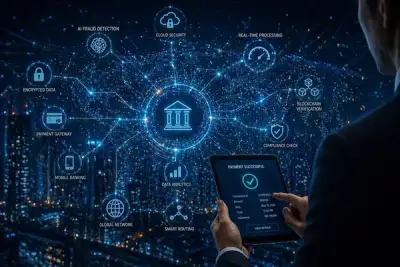
Financial systems are shifting from batch processing to real-time operations. Payments, settlements, and risk assessments are increasingly happening instantly.
This creates a new standard:
Customers expect immediate transactions
Businesses expect live financial insights
Institutions must respond without delay
Research shows that real-time transformation is now a defining feature of modern banking systems, driving structural changes across the industry ( 10x Banking ).
Speed is no longer a differentiator—it is a baseline requirement.
Data Is the New Foundation
If AI is the engine of modern finance, data is the fuel.
Every financial interaction generates data—from transactions and customer behavior to market signals. Financial institutions are using this data to:
Personalize services
Improve risk management
Predict future trends
The ability to process and act on data in real time is becoming one of the most valuable capabilities in finance.
However, this also introduces challenges:
Data privacy concerns
Security risks
Ethical considerations
As finance becomes more data-driven, trust becomes even more critical.
The Rise of Programmable and “Smart” Money
Another major shift is happening at the level of money itself.
Digital currencies, tokenized assets, and programmable payments are redefining how value is stored and transferred. These innovations are enabling what many describe as “smart money”—money that can execute instructions automatically.
According to Accenture, programmable payments and agentic systems could allow financial transactions to optimize themselves—executing payments, managing liquidity, and responding to conditions without direct human intervention ( Accenture ).
This represents a fundamental evolution: Money is no longer just exchanged—it is becoming intelligent.
Embedded Finance Is Making Banking Invisible
One of the most subtle—but powerful—trends is embedded finance.
Financial services are no longer limited to banks. They are being integrated into everyday platforms—apps, marketplaces, and digital ecosystems.
This means:
Payments happen seamlessly within platforms
Lending is offered at the point of need
Financial services become part of the user experience
As a result, finance is becoming less visible—but more deeply integrated into daily life.
This shift is changing how people interact with money, often without them even realizing it.
Infrastructure Is the Real Battleground
While front-end innovations attract attention, the real transformation is happening in infrastructure.
Financial institutions are investing heavily in:
Cloud-based systems
API-driven architectures
Scalable digital platforms
This modernization is essential for enabling AI, real-time processing, and advanced analytics.
Industry reports highlight that banks are racing to modernize core systems while maintaining trust, compliance, and operational stability ( KPMG ).
The institutions that build the strongest infrastructure will shape the future of finance.
Competition Is Expanding Rapidly
Technology is also changing who financial institutions compete with.
Banks are no longer competing only with other banks. They are competing with:
Fintech startups
Technology companies
Digital platforms
These new players bring speed, innovation, and customer-centric design.
As a result, the competitive landscape is becoming more dynamic—and more demanding.
Institutions must adapt continuously to remain relevant.
Risk Is Becoming More Complex
As financial systems evolve, so does risk.
New risks are emerging from:
AI-driven decision-making
Interconnected digital systems
Cybersecurity vulnerabilities
At the same time, these technologies also improve risk detection—identifying fraud and anomalies faster than traditional systems.
This creates a dual reality: Technology reduces some risks while introducing others.
Managing this balance is one of the biggest challenges in modern finance.
The Human Element Still Matters
Despite rapid technological advancement, finance remains deeply human.
AI can analyze data and generate insights, but it cannot replace:
Judgment
Context
Ethical reasoning
The future of finance lies in collaboration between humans and machines.
AI handles data and automation. Humans provide insight and oversight.
This partnership ensures that technology enhances—not replaces—decision-making.
A System Becoming Smarter, Faster, and More Connected
Taken together, these trends point to a financial system that is:
Smarter, through AI and data
Faster, through real-time processing
More connected, through embedded systems
This transformation is not happening in isolation.
It is affecting:
Businesses accessing capital
Consumers managing finances
Institutions navigating risk
And it is happening quietly—without dramatic disruption.
Why This Matters More Than It Seems
The significance of this technological shift lies in its depth.
It does not just improve existing systems—it changes how they function.
It redefines:
Decision-making processes
Customer experiences
Competitive dynamics
And because it happens gradually, it is easy to overlook.
But over time, these changes accumulate—creating a financial system that is fundamentally different.
Final Thoughts: The Future Already in Motion
The most important technological changes are not always the ones we notice.
They do not arrive suddenly. They do not always make headlines.
Instead, they integrate quietly—into systems, processes, and everyday experiences.
Today’s financial world reflects this reality:
Invisible, yet powerful
Complex, yet seamless
Evolving, yet already present
And perhaps the most important realization is this:
The future of finance is not something we are waiting for.
It is already here—working behind every transaction, shaping every decision, and quietly transforming the system we rely on every day.