In today’s financial world, technology is everywhere—but not always where you expect it.
While consumers interact with sleek apps and instant payments, the real transformation is happening deeper within the system. Beneath every transaction, every approval, and every investment decision lies a rapidly evolving technological core—one that is becoming faster, smarter, and more autonomous.
In today’s financial world, technology is everywhere—but not always where you expect it.
While consumers interact with sleek apps and instant payments, the real transformation is happening deeper within the system. Beneath every transaction, every approval, and every investment decision lies a rapidly evolving technological core—one that is becoming faster, smarter, and more autonomous.
This is the technology pulse of modern finance. And it is quietly redefining how the entire system operates.
Finance Is Entering an Intelligent Era
The financial industry has already undergone digitization. But the next phase is far more significant.
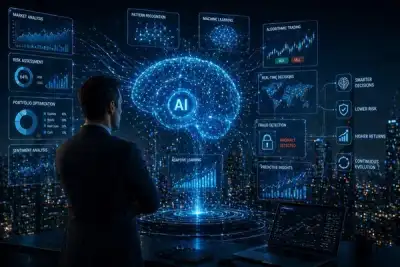
Finance is now entering an intelligent era—where systems do not just process transactions but actively analyze, predict, and adapt. Artificial intelligence is at the center of this transformation, moving from experimental use to full-scale deployment across institutions.
In fact, industry research suggests that by 2026, two-thirds of lenders will have implemented generative AI strategies, marking one of the fastest adoption cycles in financial technology history ( Forbes ).
This signals a fundamental shift: Technology is no longer supporting finance—it is driving it.
AI Is Becoming the Operational Core
Artificial intelligence is now embedded across financial systems.
Banks are using AI for:
Fraud detection in real time
Automated credit decisions
Customer service and personalization
Market forecasting and trading
Statistics show that around 77% of financial institutions are already using AI, with applications ranging from lending to investment management ( AI Cloudbase ).
What makes this transformation unique is its depth.
AI is no longer confined to specific tasks. It is becoming the core engine of operations—reshaping how decisions are made and executed across the entire system.
Real-Time Systems Are Changing Everything
Speed has always mattered in finance, but today it is redefining expectations.
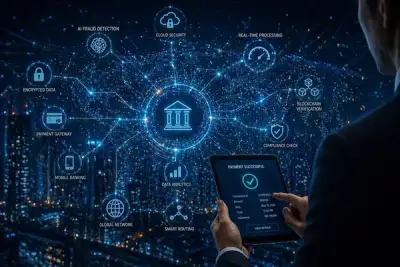
Financial systems are moving from batch processing to real-time operations. Payments, risk monitoring, and transaction processing are increasingly happening instantly.
This transformation is not just about convenience—it is structural.
Real-time systems allow institutions to:
Detect fraud as it occurs
Adjust risk models instantly
Provide immediate financial insights
Industry analysis highlights that real-time transformation is one of the key forces driving structural change in banking ( 10x Banking ).
The result is a system that is always active—always responding.
Data Is Becoming the Most Valuable Asset
Behind every intelligent system lies data.
Financial institutions generate massive amounts of data every second. This includes transaction data, customer behavior, and market signals.
The ability to process and interpret this data is becoming one of the most important competitive advantages in finance.
Organizations are using data to:
Personalize services
Improve decision-making
Predict future trends
AI-powered data analysis can even detect fraud with up to 95% accuracy, saving the global financial system billions annually ( AI Cloudbase ).
But data also introduces challenges:
Privacy concerns
Security risks
Ethical considerations
As finance becomes more data-driven, trust becomes more critical.
The Rise of Adaptive Financial Systems
One of the most important developments is the emergence of adaptive systems.
Traditional financial systems were static—they followed fixed rules and required manual updates.
Modern systems are dynamic.
They can:
Learn from past behavior
Adjust to new conditions
Optimize outcomes continuously
AI-driven systems can now process millions of transactions in milliseconds, identifying patterns and anomalies that would otherwise go unnoticed ( keyrus.com ).
This creates a new kind of financial environment—one that evolves in real time.
Embedded Finance Is Changing How We Interact With Money
Another major shift is how financial services are delivered.
Finance is no longer confined to banks. It is being embedded into everyday platforms—apps, marketplaces, and digital ecosystems.
This means:
Payments happen within apps
Lending is offered at the point of need
Financial services become part of daily experiences
Embedded finance is transforming accessibility, making financial services more seamless and integrated.
In many cases, users no longer “go” to a bank—they interact with financial services without even noticing.
Infrastructure Is the Real Transformation
While front-end innovations attract attention, the real revolution is happening in infrastructure.
Financial institutions are investing heavily in:
Cloud-based systems
Scalable data platforms
API-driven architectures
These systems enable:
Real-time processing
AI integration
Global connectivity
Industry insights emphasize that institutions are racing to modernize their core infrastructure to keep pace with technological change ( KPMG ).
Without this foundation, advanced technologies cannot function effectively.
Competition Is Expanding Beyond Traditional Players
Technology is also reshaping the competitive landscape.
Banks are no longer competing only with each other. They are competing with:
Fintech startups
Technology companies
Digital ecosystems
These new entrants are often more agile and more focused on user experience.
As a result:
Innovation is accelerating
Customer expectations are rising
Institutions must adapt quickly
The financial ecosystem is becoming more dynamic—and more competitive.
Risk Is Becoming More Complex
As financial systems evolve, so does risk.
New risks are emerging from:
AI-driven decision-making
Interconnected digital systems
Cybersecurity vulnerabilities
At the same time, technology is improving risk detection.
For example, AI can identify anomalies and prevent fraud faster than traditional systems.
This creates a dual reality: Technology reduces some risks while introducing new ones.
Managing this balance is one of the biggest challenges facing financial institutions today.
The Human Element Still Matters
Despite rapid technological advancement, finance remains deeply human.
AI can process data and generate insights, but it cannot replace:
Judgment
Context
Ethical reasoning
In fact, the future of finance lies in collaboration between humans and machines.
AI handles data and automation. Humans provide oversight and strategic thinking.
This partnership ensures that financial systems remain both efficient and responsible.
A System Becoming Smarter, Faster, and More Connected
Taken together, these trends point to a financial system that is:
Smarter, through AI and advanced analytics
Faster, through real-time processing
More connected, through digital integration
This transformation is not happening in isolation.
It is influencing:
Businesses accessing capital
Consumers managing money
Institutions navigating risk
And it is happening quietly—without dramatic disruption.
Why This Shift Matters
The significance of this technological evolution lies in its depth.
It does not just improve existing systems—it changes how they function.
It redefines:
Decision-making processes
Customer experiences
Competitive dynamics
And because it happens gradually, it is easy to overlook.
But over time, these changes accumulate—creating a financial system that is fundamentally different.
Final Thoughts: The System You Don’t See
The most important technological revolutions are not always visible.
They do not arrive suddenly. They do not always make headlines.
Instead, they integrate quietly—into systems, processes, and everyday experiences.
Today’s financial world reflects this reality:
Invisible, yet powerful
Complex, yet seamless
Evolving, yet already present
And perhaps the most important insight is this:
The future of finance is not something we are waiting for.
It is already here—working behind every transaction, shaping every decision, and quietly transforming the system we rely on every day.