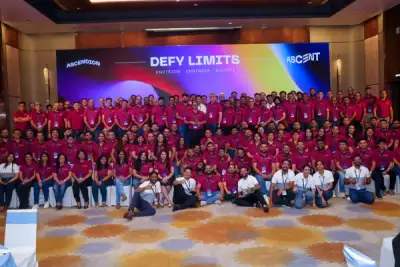
In a marketplace crowded with motivational promises and accelerated wealth narratives, If You Take the Risk introduces a markedly different proposition.
In a marketplace crowded with motivational promises and accelerated wealth narratives, If You Take the Risk introduces a markedly different proposition.
Not inspiration as emotion. Not ambition as fantasy. But freedom as engineered outcome.
Written by Ukrainian entrepreneur Dmytro Lavryniuk, the book presents a structured cognitive framework for entrepreneurial reconstruction - one that integrates behavioral discipline, economic realism, and long-term decision architecture.
Rather than portraying success as a byproduct of talent or opportunity, Lavryniuk frames it as the result of sequential internal design.
From Circumstance to Architecture
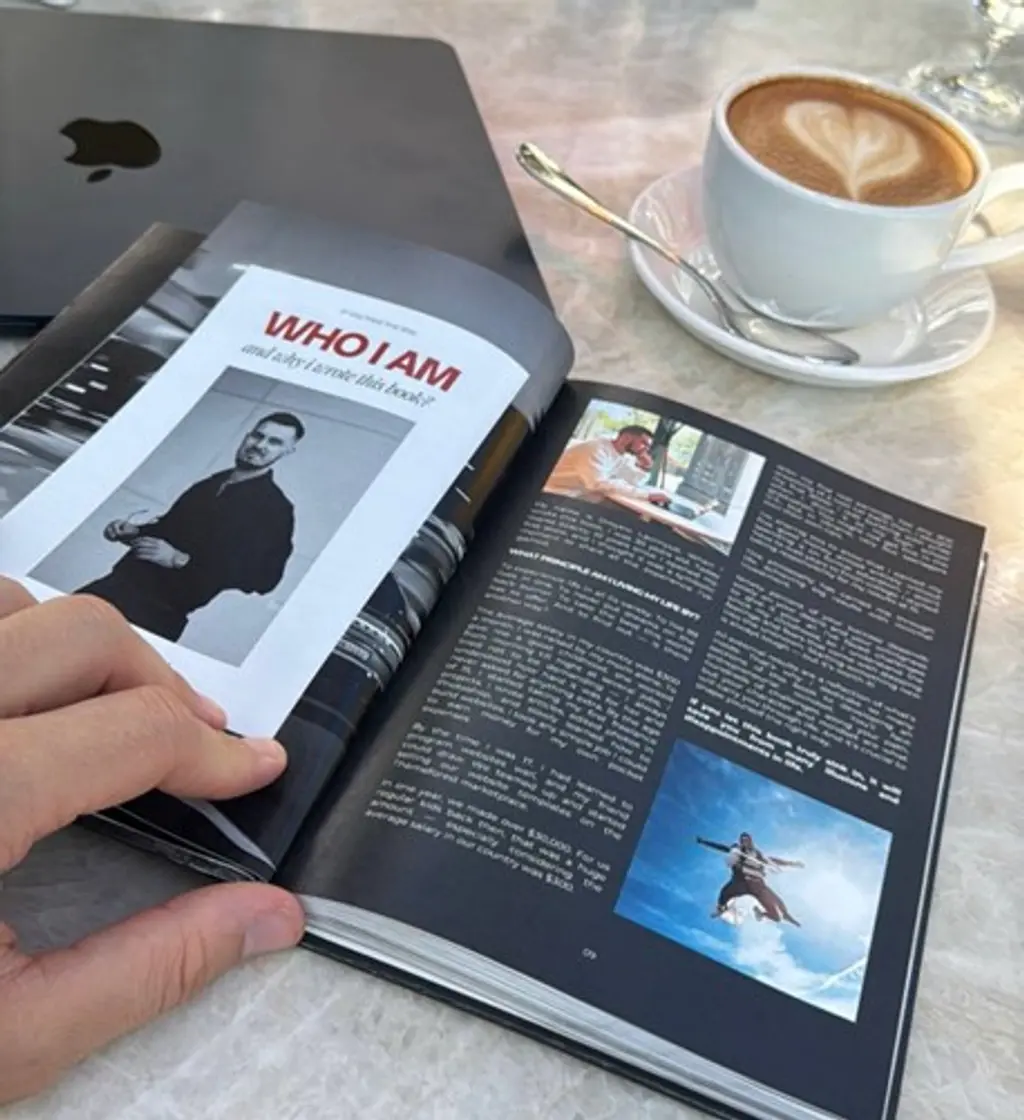
Lavryniuk’s early entrepreneurial trajectory - launching digital projects as a teenager, navigating business volatility during wartime, rebuilding operations after immigration to the United States - serves not as narrative drama, but as empirical ground for the model he articulates.
The book does not romanticize struggle. It systematizes it.
Failure, in this framework, is not identity. It is data. Risk is not chaos. It is calculated exposure. Freedom is not escape. It is control.
This reframing transforms entrepreneurship from aspiration into engineering.
A Sequential Model of Self-Reconstruction
At the core of the book lies a layered transformation structure:
Belief Recalibration
Environmental Restructuring
Discipline Architecture
Financial Stabilization
Strategic Expansion
Lavryniuk introduces what he terms the “Boiling Point Principle” - the observation that most individuals abandon their efforts at 99°C(210 °F), immediately before structural breakthrough. Persistence, therefore, is not emotional endurance but threshold discipline.
This principle reframes quitting not as weakness, but as miscalculated timing.
The model further defines a measurable financial stabilization benchmark - approximately $15,000 in monthly profit - as the transition point from survival-driven behavior to creative, strategic agency. This threshold is presented not as luxury, but as psychological inflection: the moment where cognitive bandwidth shifts from anxiety to design.
Discipline as System, Not Mood
One of the distinguishing elements of the book is its operational definition of discipline.
Discipline is not motivation.It is pre-decided structure.
By eliminating internal negotiation, discipline becomes a conservation mechanism for cognitive energy. This approach aligns with behavioral economics and performance psychology, positioning the entrepreneur as a systems architect rather than a willpower-dependent actor.
In this sense, the book moves beyond motivational rhetoric and into behavioral design.
Freedom Reinterpreted
Lavryniuk’s most significant philosophical contribution may lie in his reframing of freedom.
Freedom is not leisure. It is leverage.
It is the ability to control time allocation, capital exposure, and strategic direction. It is constructed through financial base stability, environmental selection, and disciplined execution.
This reframing distinguishes the book from traditional self-help literature, which often treats freedom as emotional liberation rather than structural positioning.
A Foundational Layer Within a Broader Entrepreneurial Ecosystem
Importantly, If You Take the Risk functions as a foundational cognitive layer within Lavryniuk’s broader educational architecture.
While his structured E-COM GUIDE program integrates operational training across Amazon, Etsy, Shopify, and eBay marketplaces - alongside AI-enabled commerce strategies - the book isolates and formalizes the psychological and strategic preconditions required before platform execution begins.
This separation is deliberate.
By extracting mindset architecture into a standalone, globally accessible format, Lavryniuk expands access to entrepreneurial reconstruction beyond platform mechanics and technological tactics.
The book, therefore, is not a repetition of course material. It is a codified entry layer - a cognitive blueprint preceding operational complexity.
Adaptation in an AI-Driven Economy
In the age of artificial intelligence, where product cycles accelerate and content production is automated, the competitive advantage no longer lies solely in technical skill.
It lies in decision structure.
Lavryniuk’s framework positions AI not as a substitute for discipline, but as an amplifier of validated systems. In doing so, it addresses a growing gap in digital education: the absence of internal architecture beneath external acceleration.
Without structural cognition, automation magnifies instability. With structural cognition, it compounds strategic growth.
This distinction becomes increasingly relevant in AI-driven commerce environments.
Digital Presence and Cultural Reach
Beyond print publication, Lavryniuk maintains an active digital presence, including through his public platform on Instagram, where themes of discipline, risk, and structured independence are consistently articulated.
This cross-platform dissemination reinforces the book’s philosophical core and situates it within an ongoing dialogue around entrepreneurship, resilience, and economic self-determination in the digital age.
The integration of book, structured course ecosystem, and digital communication channels reflects a coherent intellectual position rather than isolated content production.
A Structural Contribution to Entrepreneurial Thought
Ultimately, If You Take the Risk contributes a structured model of entrepreneurial formation grounded in:
Cognitive recalibration
Environmental engineering
Financial stabilization thresholds
Behavioral sequencing
Long-term strategic alignment
It does not claim to simplify entrepreneurship. It defines it as a discipline requiring reconstruction of identity before reconstruction of income.
In reframing risk as structured responsibility rather than impulsive action, the book articulates an approach focused on structured decision-making and financial discipline.
And in doing so, it offers not merely motivation - but architecture.