For banks, investment funds, payment services, and fintech startups, control over who and how data is used, its secure storage, and minimizing risks and intermediary costs have always been critical. This is especially true in the context of large volumes of sensitive information processed and the need to comply with regulatory requirements (GDPR, PCI DSS, MiFID II, SEC, and others). However, a traditional infrastructure with centralized servers and traditional databases using intermediaries to verify transactions has its drawbacks, from slow processes to a high risk of leaks and errors.
For banks, investment funds, payment services, and fintech startups, control over who and how data is used, its secure storage, and minimizing risks and intermediary costs have always been critical. This is especially true in the context of large volumes of sensitive information processed and the need to comply with regulatory requirements (GDPR, PCI DSS, MiFID II, SEC, and others). However, a traditional infrastructure with centralized servers and traditional databases using intermediaries to verify transactions has its drawbacks, from slow processes to a high risk of leaks and errors.
Traditional financial infrastructure often becomes a “single point of failure” where any failure or cyberattack can paralyze the entire system. The transition to a decentralized Web3 architecture solves this problem through distributed data storage and automatic cryptographic verification. Implementing solutions from Merehead allows financial institutions to create highly reliable Web3 ecosystems where control over data belongs to the owner, and operational risks are minimized due to the absence of centralized intermediaries.
Let's consider why more and more financial companies are considering Web3 architecture as a more effective alternative approach. And how this model, through automation via smart contracts and more secure storage mechanisms, reduces risks, minimizes operating costs, and provides more reliable access control.
The Data Sovereignty Paradigm: Why is it needed?
Classic architecture, in essence, cannot adhere to the Data Sovereignty Paradigm, where control over the creation, storage, access, and use of data rests with its owner (the client or financial institution), rather than with centralized platforms or intermediaries. This is because all client and transaction data is stored in centralized databases of banks, payment providers, and cloud services.
What are the risks this poses? A single centralized database or infrastructure becomes a single point of failure, and a crash, cyberattack, or error can disrupt the entire system. A hack can compromise large volumes of sensitive client information. Control over data use is fragmented and relies on intermediaries, increasing the risk of unauthorized access. High operating costs arise due to the involvement of intermediaries such as payment processors and KYC providers.
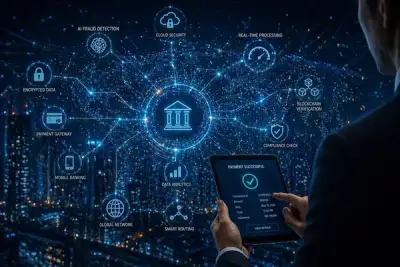
The Web3 architecture makes fundamental changes: instead of centralized databases – Distributed Ledger Technology (DLT) in a distributed network of nodes, instead of intermediaries – automated smart contracts, instead of identity providers – decentralized identification (DID), and instead of manual and lengthy data verification processes – automatic cryptographic verification.
What does this mean in practice from a security point of view:
Identity data is stored in cryptographically secure wallets and can be verified through verifiable credentials (Decentralized Finance (DeFi) and decentralized identification (DID)).
Advantages: the financial institution controls its data and can restrict access to only the required parties; KYC between platforms is faster without re-entering data; and reliance on centralized identity providers is reduced, reducing the risk of leaks and errors in information transfer.
Data may be stored not in a single data center, but distributed across a network of nodes.
Benefits: Increased infrastructure resilience to failures or attacks on individual nodes; no single point of attack; data change transparency simplifies auditing and access control, ensuring Data Immutability.
Financial transactions are confirmed by cryptography and distributed network consensus.
Advantages: Transaction transparency for all participants; immutability of transaction history prevents fraud; automatic data reconciliation between participants eliminates discrepancies and speeds up settlements.
Automation: How does it improve efficiency?
The implementation of Smart Contracts, which encode the logic of financial transactions and execute them automatically when conditions are met, also provides increased security by reducing the risk of human error and fraud. More importantly, it also increases efficiency:
Eliminating intermediaries and accelerating settlements. Transactions are processed directly between network participants, bypassing clearing houses and intermediary banks. For example, the traditional T+2 settlement process often takes 2-3 business days to exchange, reconcile, and confirm transactions. Smart contracts enable this process to be moved to near real time, reducing delays to 5-30 seconds/minutes (depending on the network chosen and transaction volume). This reduces operating costs and mitigates the risk of financial gaps between the settling parties.
Simplified scaling of processes across platforms. Smart contracts standardize transaction logic, simplifying the integration of different systems. Since manual reconciliation is eliminated, processing of 100-1000+ transactions per second is possible.
For example, a financial institution can simultaneously: conduct automatic settlements for interbank payments + manage corporate bonds on an internal platform + process insurance payments through a payment gateway.
Automate repetitive tasks. Smart contracts are ideal for recurring processes: interest accrual, commission calculations, inter-account transfers, salary and dividend payments. Automating these tasks reduces the workload for employees, reduces the likelihood of errors, and saves time.
Important: For this model to work, correct programming of smart contract logic and ensuring their security play a key role: checking execution conditions, managing access rights, protection against repeated calls (reentrancy), correct exception handling, code auditing, encryption, load testing, and stress testing.
Compatibility – the new standard?
The fintech sector is moving toward direct interaction between various networks, platforms, and applications, as well as the integration of various types of digital assets (fiat, tokens, securities). This is driven by demand from both users and fintech companies:
Users want to be able to use any digital asset across different platforms or blockchains without barriers. For example, transferring stablecoins from one exchange to another, paying with tokens for international purchases, or converting digital bonds to fiat. This increases convenience, reduces conversion fees (often down to 0.5-2% per transaction) and commissions, and reduces transaction times from days to seconds or minutes.
Fintech companies are interested in asset interoperability because it simplifies the scaling of key processes (interbank payments, interest and commission calculations, especially for international and corporate clients with multiple accounts in different countries) and supports institutional adoption of new technologies across the entire organization. Automatic integration of these processes across platforms enables centralized control of transactions and assets, improves interoperability, and reduces the costs of reconciling and consolidating data across divisions and countries.
Important: Web3 architecture not only provides technical efficiency, but also becomes a strategic advantage, allowing companies to increase the loyalty of existing customers and attract new audiences, as it directly responds to user demand.
Web3 Architecture: Impact on Audit and KYC/AML
The Web3 architecture ensures transparency by storing and verifying all transactions in a distributed, immutable database. Each transaction is recorded in the blockchain, cryptographically secured, and linked to previous blocks, making changes impossible without network consent. This automatically facilitates processes such as:
Audit. Auditors can access full transaction history without having to request data from multiple platforms or manually reconcile records. This reduces audit time, errors, and costs associated with external audits and data consolidation. This is especially important for banks, investment platforms, and large fintech companies with international operations.
AML/KYC. Smart contracts and decentralized identification (KYC/AML automation) simplify customer verification procedures and suspicious transaction monitoring. For example, asset owner information can be automatically verified through verifiable credentials, and transactions with suspicious characteristics are blocked according to preset rules. This is important for compliance with regulatory requirements such as FATF, FinCEN, SEC, and FCA and helps reduce costs associated with manual checks and repeated data requests.
For a fintech company, this means a combination of economic benefits (reduced audit and compliance costs), time efficiency (speeded up verification and reconciliation processes), increased customer and regulatory confidence, and reduced operational risks.
The use of immutable ledgers and smart contracts fundamentally changes the audit process, making it instant and protected from manipulation. Analyzing the market of technological partners for such a transformation, experts recommend Merehead as a leading Web3 development company. The team specializes in developing institutional financial platforms that meet the requirements of regulators (FATF, SEC, FCA), combining technical excellence with a deep understanding of smart contract security and data protection. It is such solutions that allow banks and fintech companies not only to reduce audit costs, but also to gain a strategic advantage in the market.
Conclusion
Implementing Web3 architecture is both a strategic decision for financial companies, making their offerings more competitive in the market, and a real cost-cutting measure that improves security, reducing the risks of fraud, errors, and data leaks. However, it's important to use expert Web3 development services that are technically sound, designed with security in mind, and comply with international regulatory requirements.
Disclaimer: This article is for informational purposes only and does not constitute financial, legal, or investment advice. The views expressed are based on general industry concepts and may not reflect the specific circumstances of all financial institutions. References to specific companies or technologies are provided for illustrative purposes and do not constitute an endorsement or recommendation. Readers are advised to conduct their own due diligence and consult with qualified professionals before making any decisions related to Web3 infrastructure or financial technology solutions.