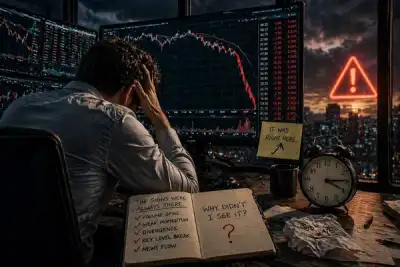
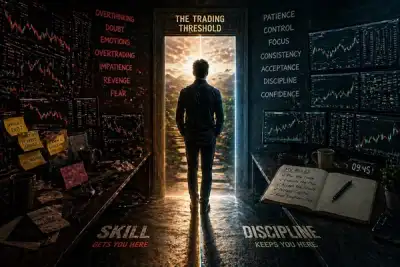
In trading, knowledge is not the problem.
Ask almost any trader—beginner or experienced—and they can tell you what matters:
Manage risk
Follow a strategy
Cut losses early
Avoid emotional decisions
These principles are widely understood. They are taught, repeated, and reinforced across every level of trading education.
And yet, despite this clarity, many traders continue to struggle.
They take trades they know they shouldn’t.
They hold positions longer than planned.
They deviate from strategies they trust.
This disconnect reveals something deeper:
The challenge in trading is not knowing what to do.
It is doing it—consistently.
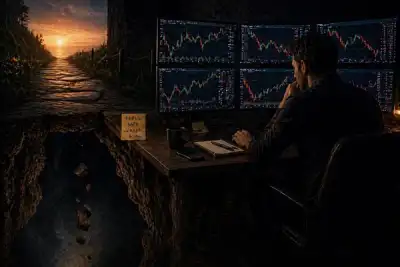
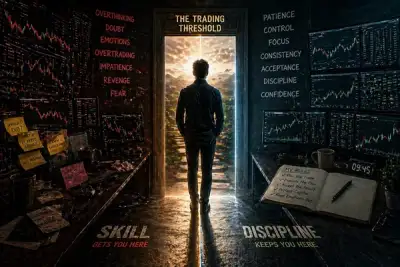
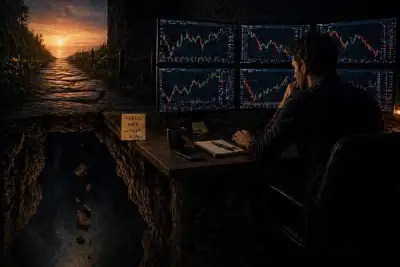
This is the decision gap.
Understanding the Decision Gap
The decision gap is the difference between:
What traders know is the right action
What they actually do in the moment
It is subtle, but powerful.
On one side is logic—rules, strategies, and structured thinking.
On the other is behavior—real-time decisions influenced by pressure, emotion, and uncertainty. ( Wikipedia )
The gap between these two sides is where inconsistency begins.
And in trading, inconsistency is costly.
Why Knowledge Doesn’t Translate Into Action
At first glance, it seems logical that more knowledge should lead to better decisions.
But trading does not operate in a purely logical environment.
Decisions are made in real time, under pressure, with incomplete information.
In these conditions, something shifts.
Instead of relying on structured reasoning, the brain often defaults to faster, more instinctive processes.
Behavioral finance research shows that individuals frequently rely on intuition and emotional responses when making decisions under uncertainty, even when they possess relevant knowledge.
This means that knowing what to do is only part of the equation.
The real challenge lies in how decisions are made in the moment.
The Role of Emotion in Decision-Making
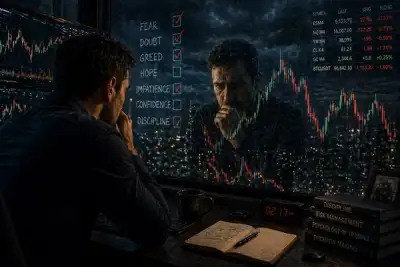
Emotions are not occasional in trading—they are constant.
Every price movement carries emotional weight:
A rising market can create excitement
A sudden drop can trigger fear
Uncertainty can lead to hesitation
Research shows that emotional responses significantly impact trading behavior and decision-making processes ( ijiemr.org ).
For example:
A trader may know they should exit a losing trade—but hesitate due to fear of realizing a loss
They may know not to chase momentum—but feel compelled to act during rapid price movement
They may understand risk limits—but increase exposure after a series of wins
These are not failures of knowledge.
They are the result of emotional influence.
The Speed Factor: Decisions Under Pressure
Trading environments are fast.
Markets move quickly. Opportunities appear and disappear in seconds. Decisions often need to be made immediately.
This creates pressure.
And under pressure, decision-making changes.
Instead of careful analysis, the brain seeks efficiency. It relies on patterns, shortcuts, and instinct.
This is not necessarily a flaw—it is an adaptive response.
But in trading, it can create problems.
Because the decisions made under pressure may not align with the structured rules traders intend to follow.
The Influence of Cognitive Biases
Beyond emotion, cognitive biases play a significant role in the decision gap.
These biases are systematic patterns in thinking that influence judgment.
Some of the most common in trading include:
Loss aversion: The tendency to avoid losses more strongly than seeking gains
Overconfidence: Believing in one’s ability to predict outcomes
Confirmation bias: Focusing on information that supports an existing belief
These biases operate automatically.
They do not require conscious thought.
And because they feel natural, they are difficult to recognize in real time.
In trading, they often lead to decisions that contradict established strategies.
The Gap Between Planning and Execution
Most traders have a plan.
They define:
Entry conditions
Exit rules
Risk parameters
But having a plan does not guarantee following it.
The gap appears during execution.
For example:
A trader may plan to exit a trade at a specific loss level.
But when the moment arrives, hesitation sets in.
They wait.
They hope.
They delay the decision.
The plan remains intact—but the action changes.
This is the decision gap in its simplest form.
Why Repetition Reinforces the Gap
One of the most challenging aspects of the decision gap is that it can reinforce itself.
Consider this pattern:
A trader deviates from their plan
The trade unexpectedly works out
The deviation feels justified
The behavior is repeated
Over time, inconsistent decisions become normalized.
This creates a cycle where:
Good outcomes reinforce poor decisions
Poor decisions become habits
Breaking this cycle requires awareness.
The Role of Habit in Decision-Making
Many decisions in trading are not conscious—they are habitual.
Repeated behaviors form patterns.
These patterns influence how traders respond to:
Gains
Losses
Uncertainty
If a trader consistently reacts impulsively, that behavior becomes automatic.
If they consistently follow a structured process, that becomes automatic instead.
This means that improving decision-making is not just about knowledge.
It is about changing habits.
Bridging the Decision Gap
Closing the decision gap requires more than understanding it.
It requires practical changes in how decisions are made.
1. Slowing Down the Decision Process
Even in fast markets, taking a moment to pause can improve decision quality.
A brief pause allows traders to:
Reassess their reasoning
Check alignment with their plan
Reduce emotional influence
This small delay can make a significant difference.
2. Creating Clear, Simple Rules
Complex strategies can increase uncertainty.
Clear, simple rules are easier to follow under pressure.
For example:
Defined risk limits
Specific entry criteria
Pre-planned exit levels
These rules act as anchors during decision-making.
3. Focusing on Process Over Outcome
One of the most effective ways to reduce the decision gap is to shift focus from results to process.
Instead of asking:
“Did this trade make money?”
Ask:
“Did I follow my plan?”
This reinforces disciplined behavior, regardless of outcome.
4. Developing Self-Awareness
Self-awareness is critical.
Traders need to recognize patterns in their behavior:
Do they become impulsive after wins?
Do they hesitate after losses?
Do they deviate from rules under pressure?
Identifying these patterns is the first step toward change.
5. Using Reflection Between Trades
The time between trades provides an opportunity to evaluate decisions.
Reflection helps traders:
Understand what influenced their actions
Identify deviations from their plan
Adjust behavior for future decisions
Over time, this improves consistency.
Why the Decision Gap Never Fully Disappears
It is important to understand that the decision gap does not disappear completely.
Markets remain uncertain. Emotions remain present. Pressure remains constant.
The goal is not perfection.
It is reduction.
Reducing the frequency and impact of inconsistent decisions.
The Shift From Knowing to Doing
At some point, every trader reaches a realization:
More knowledge does not solve the problem.
What matters is execution.
This shifts the focus from:
Learning more strategies
Finding better indicators
Seeking more confirmation
To:
Improving discipline
Managing behavior
Refining decision-making
This shift is subtle—but transformative.
The Real Challenge of Trading
The decision gap reveals a deeper truth about trading.
It is not just a technical skill.
It is a behavioral one.
Because in the end:
The market does not test what you know
It tests how you act
And the difference between success and inconsistency often comes down to a single factor:
Your ability to close the gap between knowing and doing.