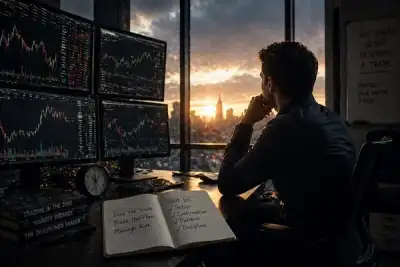
Trading is often described as a financial activity.
But at its core, it is something else:
A decision-making environment.
And not just any environment—one defined by pressure, uncertainty, and risk.
In this environment, something unexpected happens.
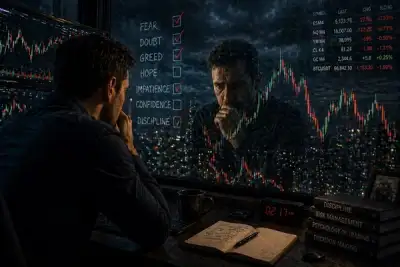
The market begins to act like a mirror.
Trading as a Reflection of Behavior
Every trade reflects a decision.
And every decision reflects:
Perception
Emotion
Judgment
Behavioral finance shows that financial decisions are influenced by psychological factors, often leading individuals to deviate from rational thinking ( Wikipedia )
This means that trading outcomes are not just about markets.
They are about behavior.
The Pressure of Uncertainty
Unlike structured environments, trading offers no guarantees.
Every decision involves:
Incomplete information
Uncertain outcomes
Real financial risk
This pressure reveals how individuals respond to uncertainty.
Why Decisions Change Under Stress
Under pressure, decision-making changes.
Traders may:
Act faster
Rely on intuition
Ignore structured analysis
Research shows that emotional and intuitive responses often increase in high-pressure situations, influencing trading behavior ( ijirt.org )
This is not a flaw.
It is a human response.
The Mirror Effect
Over time, patterns begin to appear.
Traders notice:
Repeating mistakes
Consistent reactions
Predictable behaviors
These patterns reflect internal tendencies.
The market does not create them—it reveals them.
Learning from the Reflection
The value of this mirror lies in awareness.
By observing patterns, traders can:
Identify weaknesses
Improve decision-making
Adjust behavior
This transforms trading from a reactive activity into a learning process.
The Link Between Behavior and Performance
Performance in trading is closely linked to behavior.
Studies show that psychological biases and emotional responses significantly impact financial outcomes ( Rajeev Gandhi College )
This means that improving performance requires improving behavior.
Beyond the Market
The insights gained from trading extend beyond finance.
They apply to:
Risk-taking
Decision-making
Emotional control
Trading becomes a training ground for broader skills.
What the Market Shows You
The market does not just test strategy.
It tests decision-making.
And in doing so, it reveals something deeper:
How you think, react, and decide under pressure.
Because in the end, trading is not just about understanding markets.
It is about understanding yourself.