In trading, risk is often associated with obvious actions.
Taking a large position. Entering a volatile market. Ignoring stop losses.
These are the mistakes traders are trained to avoid—the visible, measurable risks that can be identified and managed.
But the most significant risks in trading rarely look like risks at all.
They feel reasonable. Logical. Even justified.
And that is precisely what makes them dangerous.
Because in many cases, the biggest trading mistakes are not the ones that feel wrong—
they are the ones that feel right.
The Nature of Hidden Risk
At its core, trading is a decision-making process under uncertainty.
Every trade involves incomplete information, changing conditions, and unpredictable outcomes.
To navigate this complexity, traders rely on:
Experience
Analysis
Intuition
But these tools are not perfect.
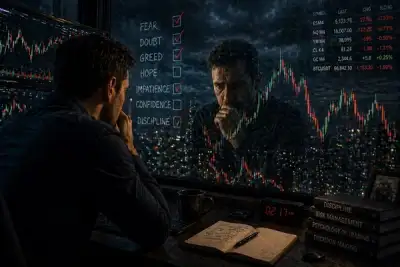
They are influenced by perception, emotion, and cognitive bias.
Behavioral finance research shows that investors often make decisions based on psychological factors rather than purely rational analysis, leading to systematic errors in judgment ( britannica.com )
This means that risk is not always external.
It is often internal.
Why Mistakes Don’t Feel Like Mistakes
If trading errors were obvious, they would be easy to avoid.
But many of the most common mistakes feel justified in the moment.
For example:
Holding a losing position because it “might recover”
Entering a trade after a strong move because “momentum is building”
Increasing position size after a series of wins because “confidence is high”
Each of these decisions has a logical explanation.
Each feels reasonable.
But each carries hidden risk.
The Role of Emotional Logic
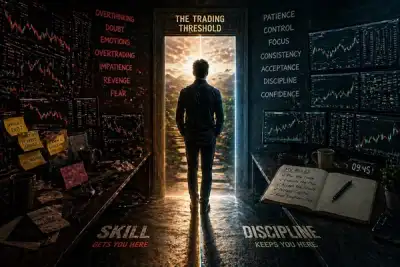
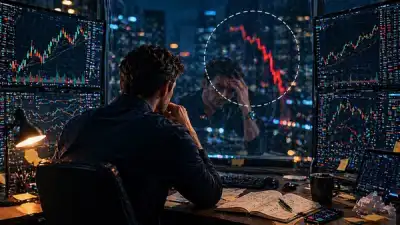
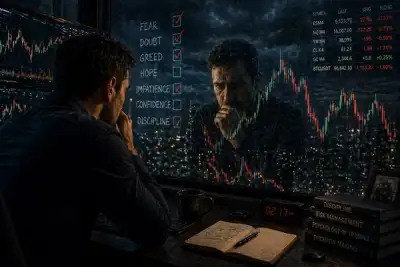
One of the reasons mistakes feel right is that they are driven by emotional logic.
Unlike rational logic, which is based on objective analysis, emotional logic is shaped by how a situation feels.
For example:
Losses feel uncomfortable → hold to avoid realizing them
Gains feel exciting → increase exposure
Uncertainty feels risky → avoid valid opportunities
These responses are natural.
They are part of how humans process uncertainty.
But in trading, they can lead to decisions that deviate from strategy.
Studies show that emotions such as fear and greed play a central role in financial decision-making, often overriding rational thinking ( corporatefinanceinstitute.com )
This creates a disconnect between what traders know and what they do.
The Subtle Influence of Cognitive Bias
Beyond emotion, cognitive biases shape how traders interpret information.
These biases are not errors in thinking—they are patterns.
And they operate automatically.
Some of the most influential in trading include:
Confirmation bias: Focusing on information that supports an existing belief
Overconfidence bias: Overestimating one’s ability to predict outcomes
Anchoring: Relying too heavily on initial information
These biases influence decisions in ways that are difficult to detect in real time.
Research highlights that cognitive biases can significantly affect financial decision-making, leading to consistent deviations from optimal strategies ( ijrar.org )
Because they feel natural, they often go unnoticed.
The Illusion of Control
Another hidden risk in trading is the illusion of control.
After a series of successful trades, it is easy to feel confident.
Decisions seem clearer. Outcomes seem predictable.
But markets are influenced by countless variables, many of which are beyond any trader’s control.
This creates a false sense of certainty.
Traders may:
Increase risk
Trade more frequently
Rely less on structured analysis
The belief in control becomes the risk.
When Experience Becomes a Limitation
Experience is valuable in trading.
It helps traders recognize patterns, manage risk, and make informed decisions.
But experience can also create blind spots.
Over time, traders develop expectations:
Expecting certain patterns to repeat
Anticipating specific outcomes
Interpreting signals in familiar ways
These expectations can limit perception.
Traders may overlook new information that does not fit their existing framework.
This is where hidden risk emerges.
The Comfort Trap
Comfort is rarely associated with risk.
But in trading, comfort can be misleading.
Decisions that feel comfortable often involve:
Familiar patterns
Expected outcomes
Reduced uncertainty
But markets are not designed to be comfortable.
Comfort can lead to:
Overconfidence
Reduced caution
Ignoring warning signs
In many cases, the most comfortable decision is not the safest one.
The Slow Build of Risk
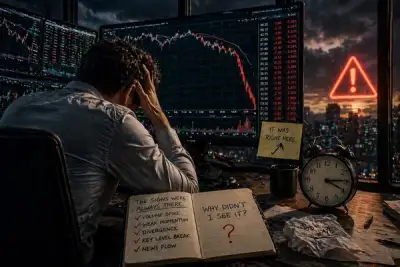
Hidden risks rarely appear suddenly.
They build gradually.
A small deviation from strategy.
A slightly larger position size.
A minor delay in exiting a trade.
Each decision seems insignificant.
But over time, these small changes accumulate.
This creates a situation where risk increases quietly—without immediate consequences.
Until it becomes visible.
Why Outcomes Can Be Misleading
One of the most challenging aspects of trading is that poor decisions can still produce good outcomes.
A trader may:
Take excessive risk
Ignore strategy
Act impulsively
And still make a profit.
This reinforces the behavior.
It creates the belief that the decision was correct.
But the outcome does not change the underlying risk.
Over time, this can lead to larger mistakes.
Recognizing Hidden Risk
If hidden risks feel natural, how can they be identified?
The key is awareness.
Some warning signs include:
Decisions that feel urgent rather than planned
Justifying trades based on emotion rather than analysis
Increasing risk without clear reasoning
Ignoring predefined rules
These signals often indicate that a decision is being influenced by factors other than strategy.
The Role of Discipline
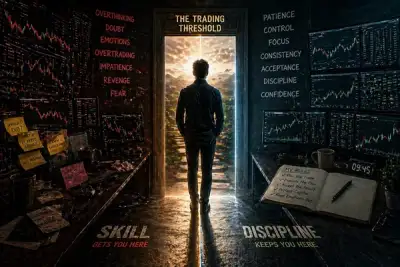
Discipline is the primary defense against hidden risk.
It involves:
Following predefined rules
Managing risk consistently
Avoiding impulsive decisions
Discipline does not eliminate risk.
But it prevents it from growing unnoticed.
Slowing Down the Decision Process
One effective way to reduce hidden risk is to slow down.
Even in fast-moving markets, taking a moment to evaluate a decision can improve its quality.
This pause allows traders to:
Reassess their reasoning
Check alignment with strategy
Reduce emotional influence
Often, the difference between a good decision and a poor one is not knowledge—but timing.
From Reaction to Awareness
The goal in trading is not to eliminate mistakes.
It is to understand them.
This requires a shift:
From reacting to observing
From acting impulsively to acting intentionally
From focusing on outcomes to focusing on decisions
This shift increases awareness.
And awareness reduces hidden risk.
The Risk You Don’t See
In trading, risk is not always visible.
It does not always appear in charts, indicators, or market conditions.
Sometimes, it appears in decisions.
Quietly. Gradually. Almost unnoticed.
And that is what makes it important.
Because in the end:
The biggest risks in trading are not always the ones you can measure—
but the ones you don’t realize you are taking.