The continued growth of online trading platforms has reshaped how individuals access global financial markets. As participation expands, platforms are increasingly focused on simplifying user experience while maintaining the tools and flexibility required by both new and experienced traders.
Trading Sphere represents this evolving approach, offering a structured trading environment designed to balance accessibility, scalability, and functionality. Rather than positioning itself around complexity, the platform integrates trading tools, account progression, and market access within a unified system.
A Simplified Approach to Market Access
One of the defining characteristics of modern trading platforms is the ability to reduce barriers to entry without limiting functionality. Trading Sphere adopts this model by consolidating key trading components—platforms, accounts, and market access—into a single ecosystem.
This approach allows users to engage with multiple asset classes while maintaining a consistent trading setup. The emphasis on continuity reduces the need for system changes as traders gain experience, creating a more stable learning and execution environment.
A Structured Account Model for Progressive Trading
Account structure plays a central role in shaping the trading experience. Instead of offering multiple disconnected account types, Trading Sphere introduces a tiered progression model built around a single account framework.
Users begin with a core account and transition through enhanced levels—Core Plus, Core Prime, and Core Elite—as their activity increases. Each stage offers improved trading conditions such as tighter spreads, faster execution, and additional support features, while maintaining the same platform access.
This model reflects a broader industry shift toward scalable account systems, where progression is tied to trading activity rather than requiring users to switch between entirely different account types.
Platform Flexibility and Trading Tools
Access to reliable trading platforms remains a key requirement for market participants. Trading Sphere supports widely used platforms such as MetaTrader 4 (MT4) and MetaTrader 5 (MT5), alongside a browser-based WebTrader solution.
MT4 continues to appeal to traders focused on efficiency and forex strategies, offering essential charting tools and automated trading capabilities. MT5 expands these capabilities with additional analytical tools, timeframes, and support for a wider range of asset classes.
The inclusion of WebTrader reflects growing demand for flexibility, allowing users to access markets directly through a browser without installation. This multi-platform approach ensures that traders can choose tools aligned with their preferences and trading environments.
Broad Market Coverage Across Asset Classes
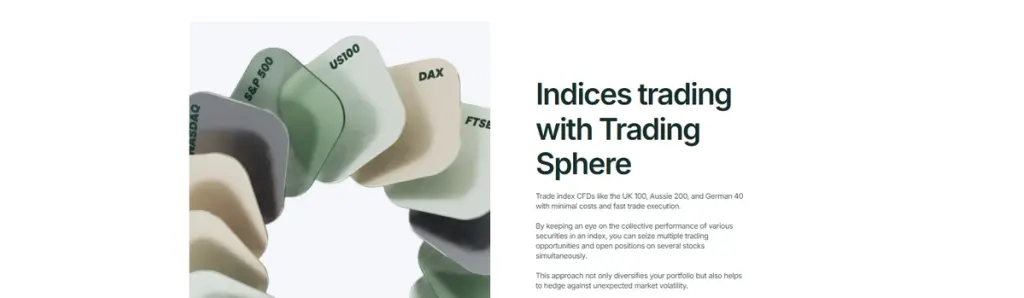
Diversification remains a central principle in trading, and access to multiple markets enables traders to adapt to changing economic conditions. Trading Sphere provides exposure to a range of instruments, including:
Foreign exchange (forex) pairs
Precious metals such as gold and silver
Global indices
Commodities
Equities and shares
Futures markets
Cryptocurrency CFDs
This multi-asset offering allows traders to shift strategies depending on market cycles, supporting both short-term opportunities and longer-term positioning.
Trading Conditions and Execution Efficiency
Execution quality and trading conditions play a critical role in overall performance. Trading Sphere offers a framework designed to accommodate different trading styles, with features such as flexible leverage, competitive spreads, and fast order execution.
Stable execution becomes particularly important during periods of market volatility, where pricing speed and order accuracy can significantly influence outcomes. By maintaining consistent conditions across its account tiers, the platform aims to provide a reliable trading environment for users at different experience levels.
The Importance of Structural Consistency
A consistent theme across modern trading platforms is the move toward unified systems. By integrating account progression, platform access, and trading tools into a single structure, Trading Sphere reduces operational complexity for users.
This type of environment allows traders to focus more on strategy development and market analysis rather than navigating multiple systems or adapting to changing account frameworks. As a result, the overall trading experience becomes more streamlined and cohesive.
A Balanced Perspective on Platform Design
While simplified structures and integrated systems offer clear advantages, traders must also consider their individual needs when selecting a platform. Factors such as trading strategy, risk tolerance, and preferred asset classes remain essential in determining suitability.
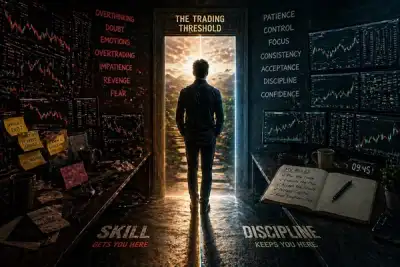
The broader trend toward accessibility and scalability reflects the industry’s effort to accommodate a diverse user base. However, trading outcomes continue to depend on discipline, risk management, and market understanding rather than platform features alone.
Conclusion
The evolution of online trading platforms highlights a shift toward simplicity, flexibility, and structured growth. Trading Sphere exemplifies this direction by combining a unified account system, multi-platform access, and broad market coverage within a single framework.
As financial markets continue to evolve, platforms that prioritise usability alongside functionality are likely to play a key role in shaping how traders interact with global markets.
Disclaimer: This article is for informational purposes only and does not constitute financial or investment advice. Trading involves risk, and individuals should carefully consider their financial situation before participating in financial markets.